Lightpaper
The first impression of your brand wasn’t authored by you.

John Marcinuk
Founder & CEO
9 slides
1 / 10
Before a buyer visits your site, AI has already read your reviews, community discussions, press coverage and indexed content, and formed a summary. Here’s what brands should know.
Read it as text
Before a buyer visits your site, AI has already read your reviews, community discussions, press coverage and indexed content, and formed a summary. Here’s what brands should know.
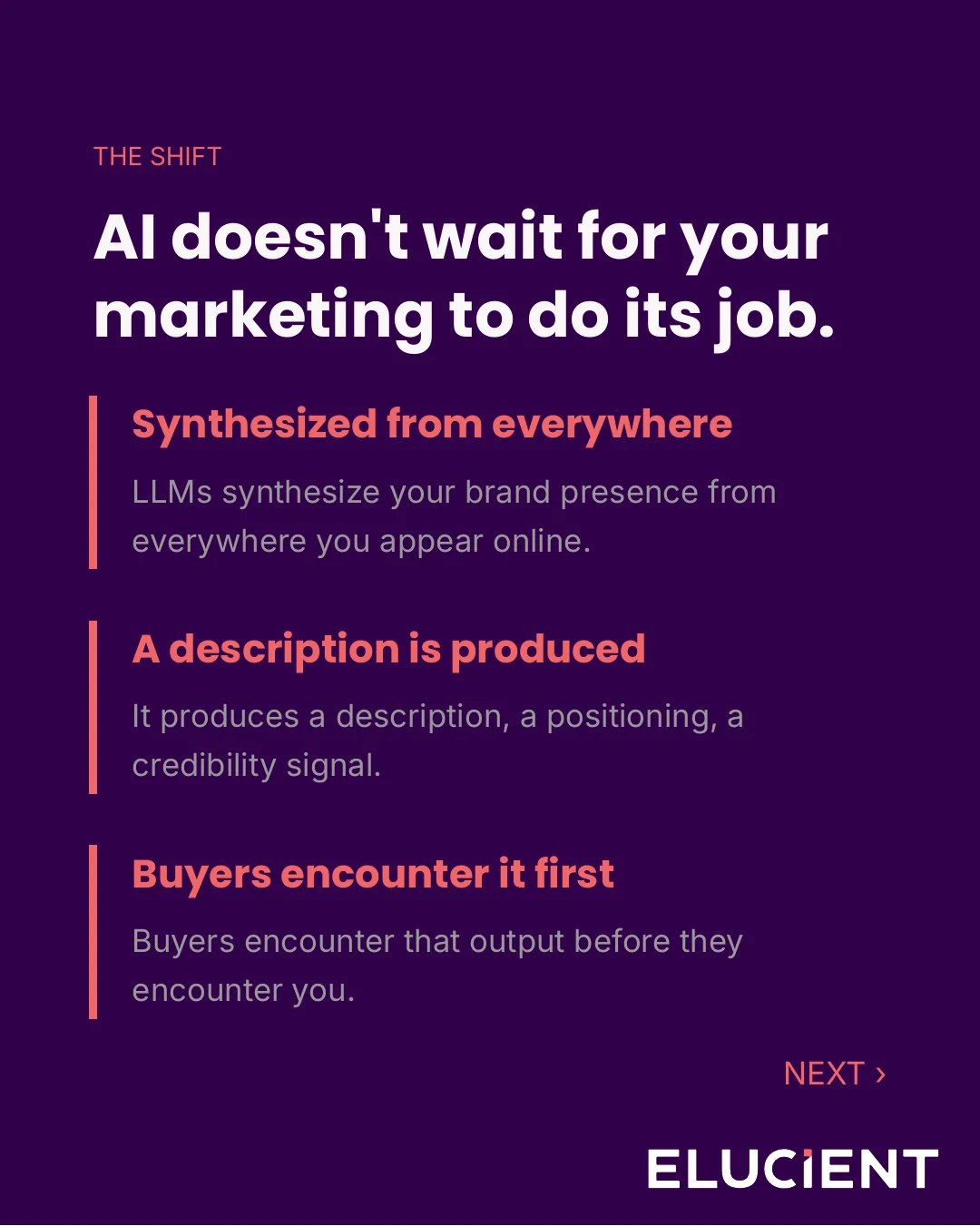
The shift
AI doesn’t wait for your marketing to do its job.
- Synthesized from everywhere: LLMs synthesize your brand presence from everywhere you appear online.
- A description is produced: It produces a description, a positioning, a credibility signal.
- Buyers encounter it first: Buyers encounter that output before they encounter you.
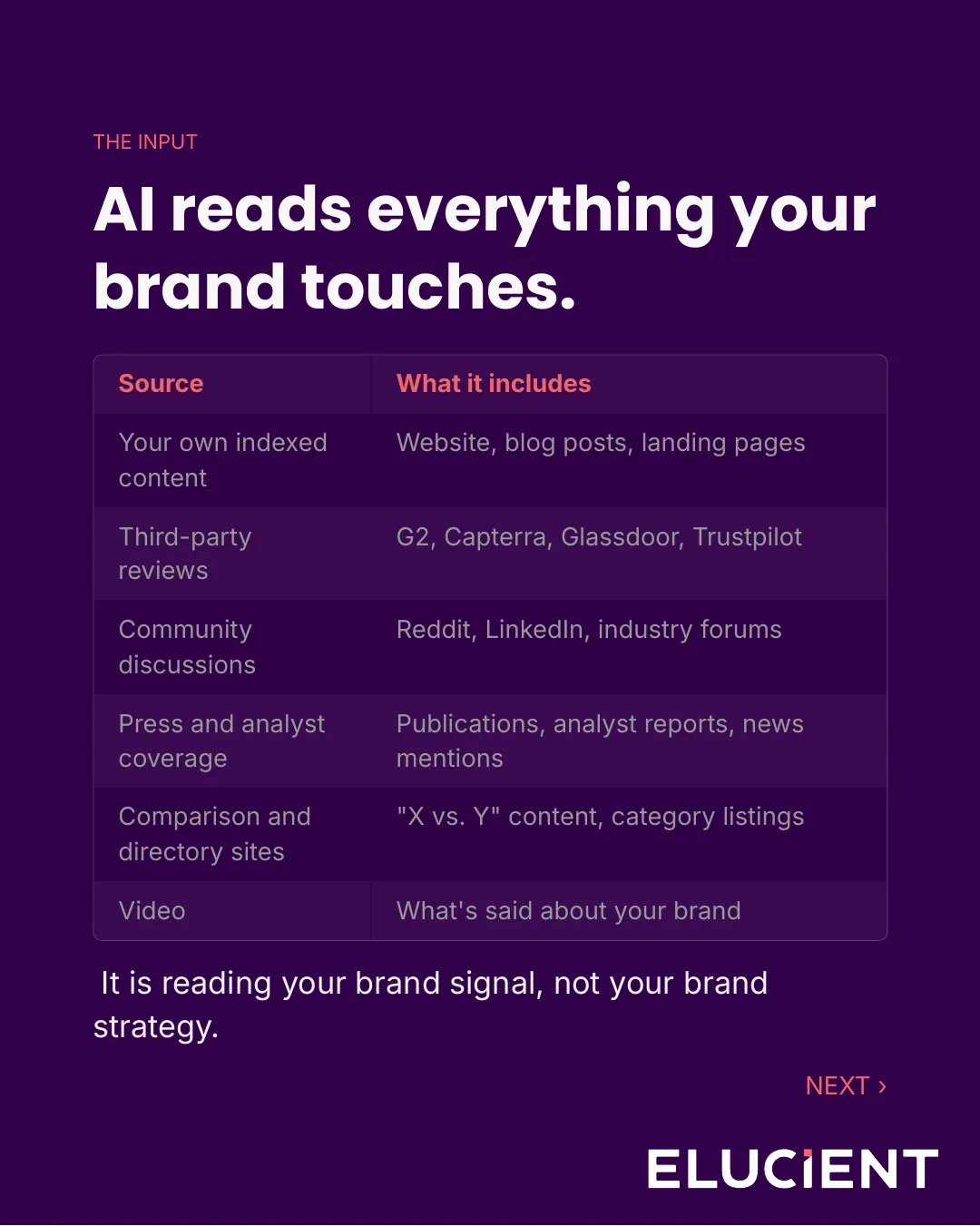
The input
AI reads everything your brand touches.
| Source | What it includes |
|---|---|
| Your own indexed content | Website, blog posts, landing pages |
| Third-party reviews | G2, Capterra, Glassdoor, Trustpilot |
| Community discussions | Reddit, LinkedIn, industry forums |
| Press and analyst coverage | Publications, analyst reports, news mentions |
| Comparison and directory sites | “X vs. Y” content, category listings |
| Video | What’s said about your brand |
It is reading your brand signal, not your brand strategy.
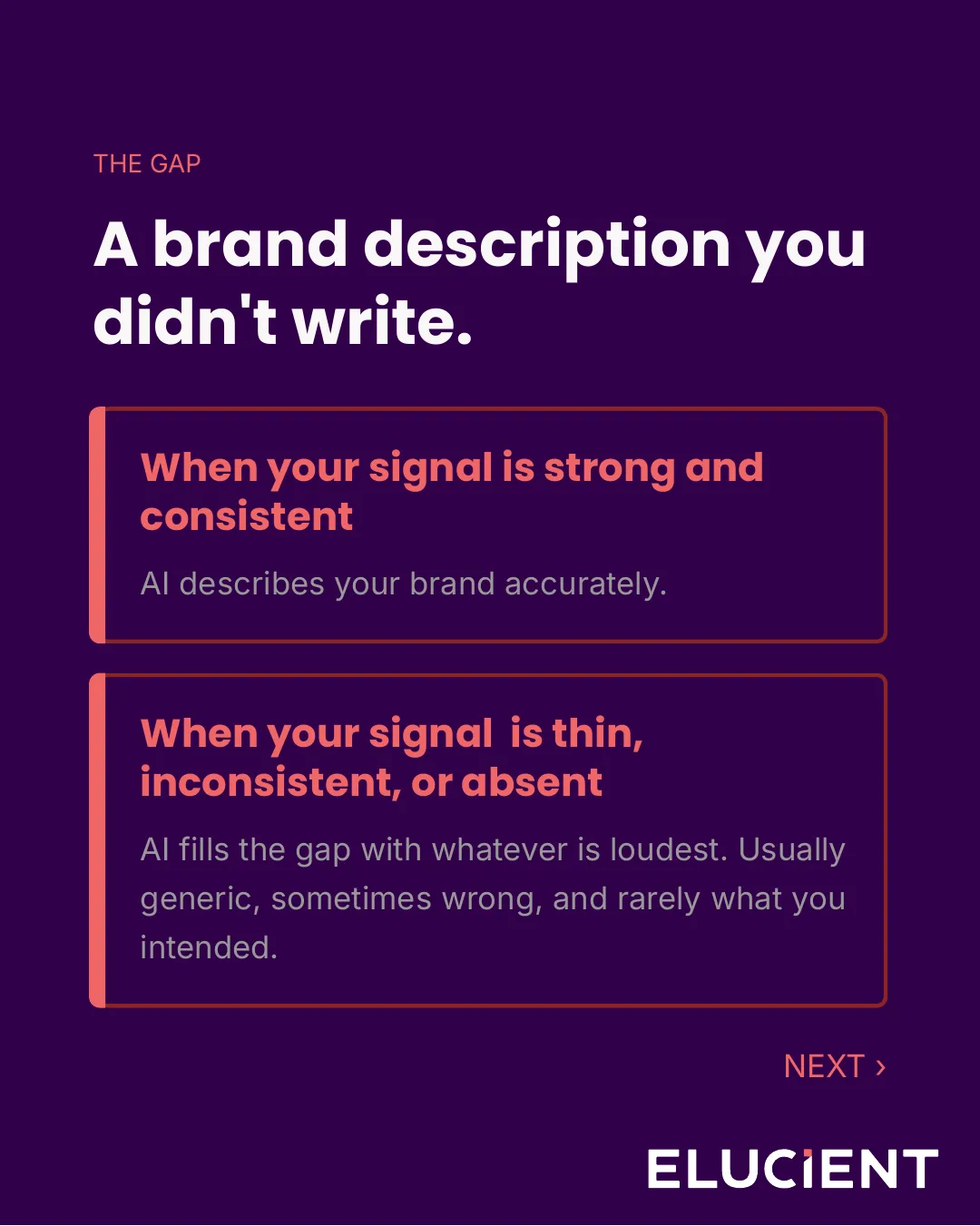
The gap
A brand description you didn’t write.
- When your signal is strong and consistent: AI describes your brand accurately.
- When your signal is thin, inconsistent, or absent: AI fills the gap with whatever is loudest. Usually generic, sometimes wrong, and rarely what you intended.
The consequence
Most brand strategies were built around content you control.
AI forms its impression from everything else. The gap between how you describe your brand and how buyers first encounter it is rooted in brand strategy, not copy execution.
A copy review will not close the gap. If those two things are not aligned, no amount of copy refinement will bridge the distance between your intended brand and the one buyers encounter first.
The solution
Brand clarity has to exist upstream of the content you author.
- A distinctive position: One that is clear enough to survive synthesis across sources you may not be actively managing.
- Consistency across sources: Alignment across the full range of places your brand appears, not just the ones you publish directly.
- A signal strong enough to survive: None of these are decisions that live in a copy doc. These are the conversations we are actively having with clients right now.
The framework
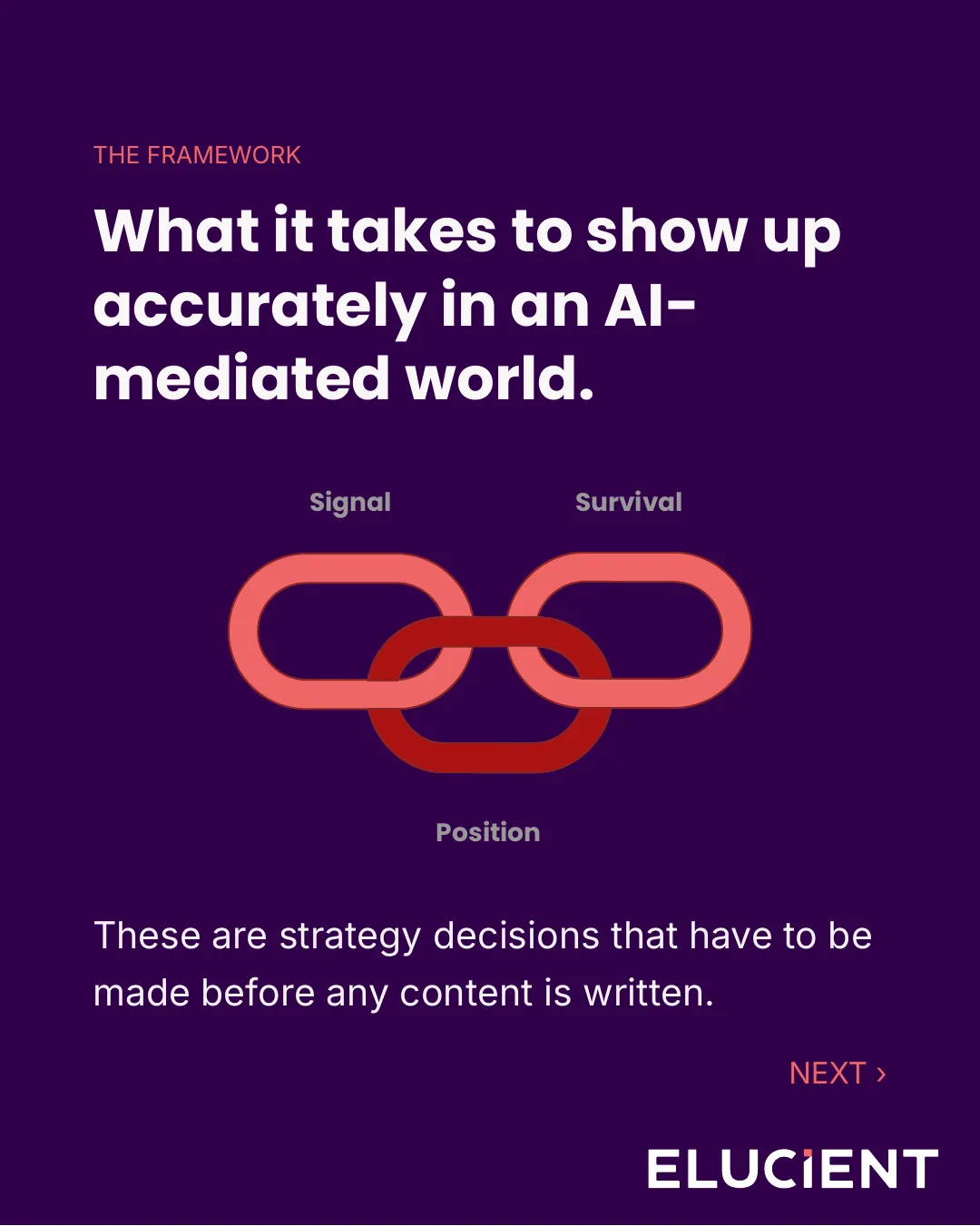
What it takes to show up accurately in an AI-mediated world.
Signal, survival and position. These are strategy decisions that have to be made before any content is written.
What brand strategy has to account for now.
- A position clear enough that AI can describe it accurately.
- Consistent signals across sources you may not be actively managing.
- The gap between how you describe your brand and how customers describe it, before it becomes a discovery problem.
The brands that show up accurately in AI-mediated discovery are the ones that invested in clarity upstream. That work starts now.