Lightpaper
Most marketing strategies were built to get approved.

John Marcinuk
Founder & CEO
7 slides


1 / 8
The document that actually gets a team executing is a different one, and most organizations never write it.
Read it as text
The document that actually gets a team executing is a different one, and most organizations never write it.
The distinction
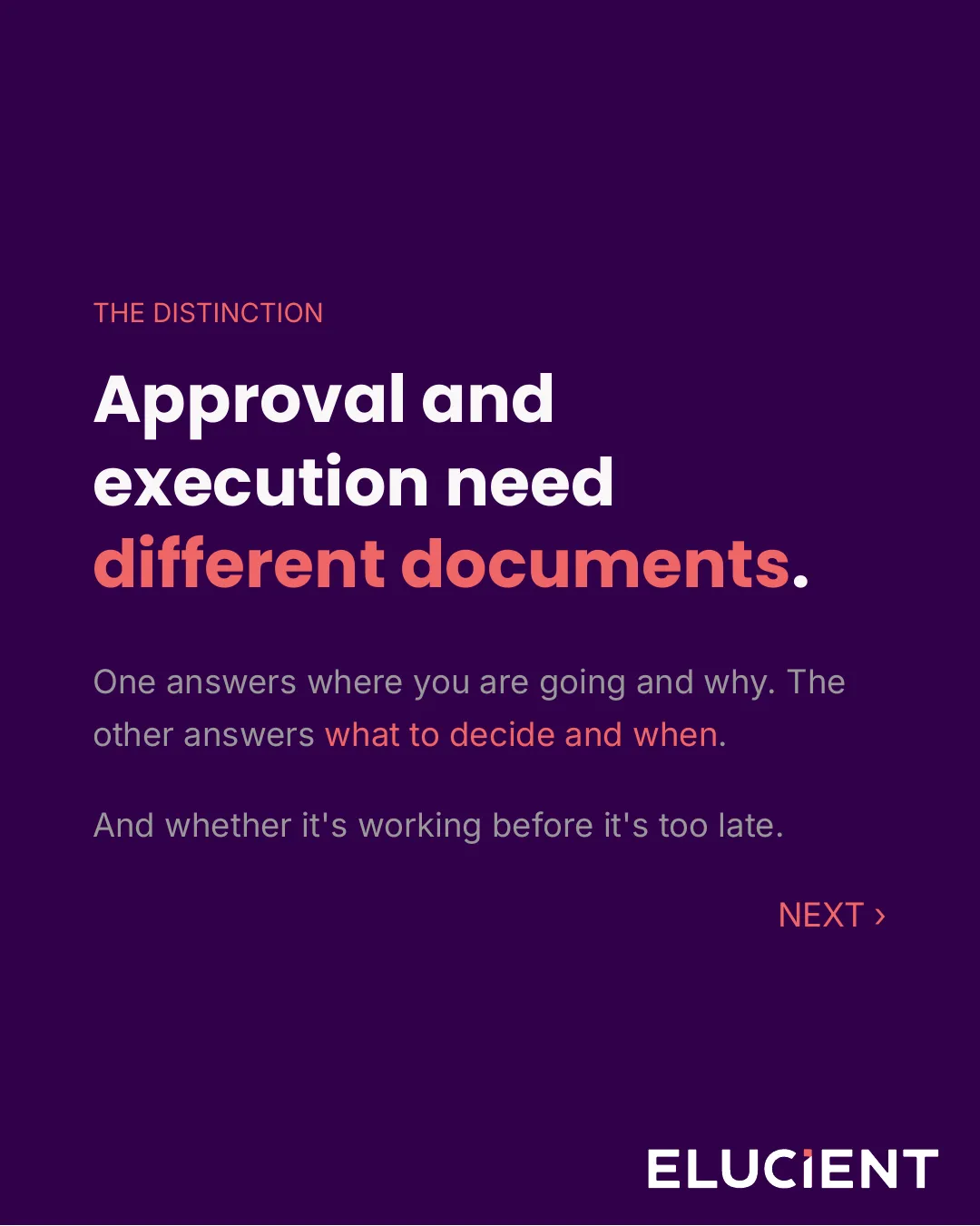
Approval and execution need different documents.
One answers where you are going and why. The other answers what to decide and when.
And whether it’s working before it’s too late.
The direction problem
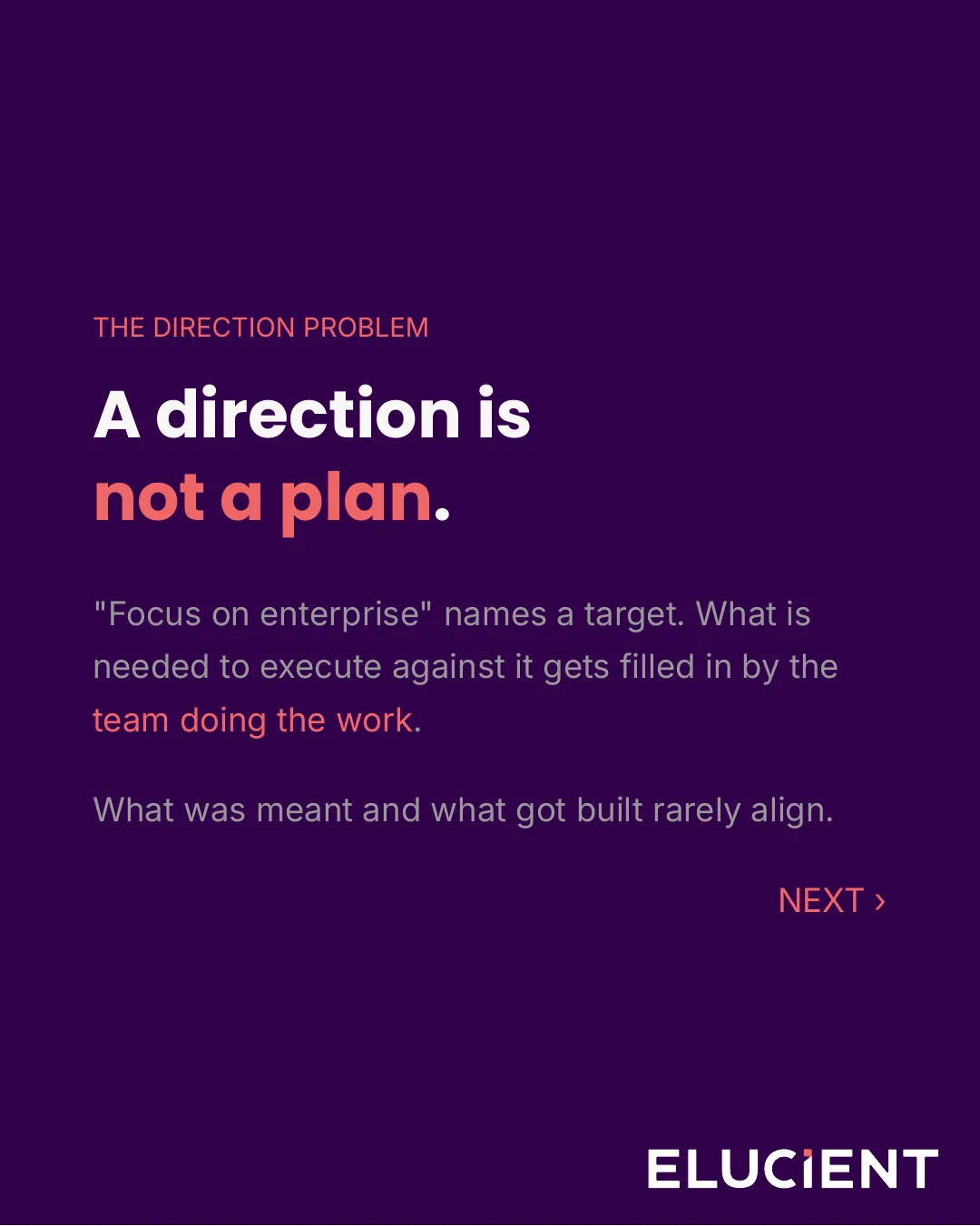
A direction is not a plan.
“Focus on enterprise” names a target. What is needed to execute against it gets filled in by the team doing the work.
What was meant and what got built rarely align.
The decision problem
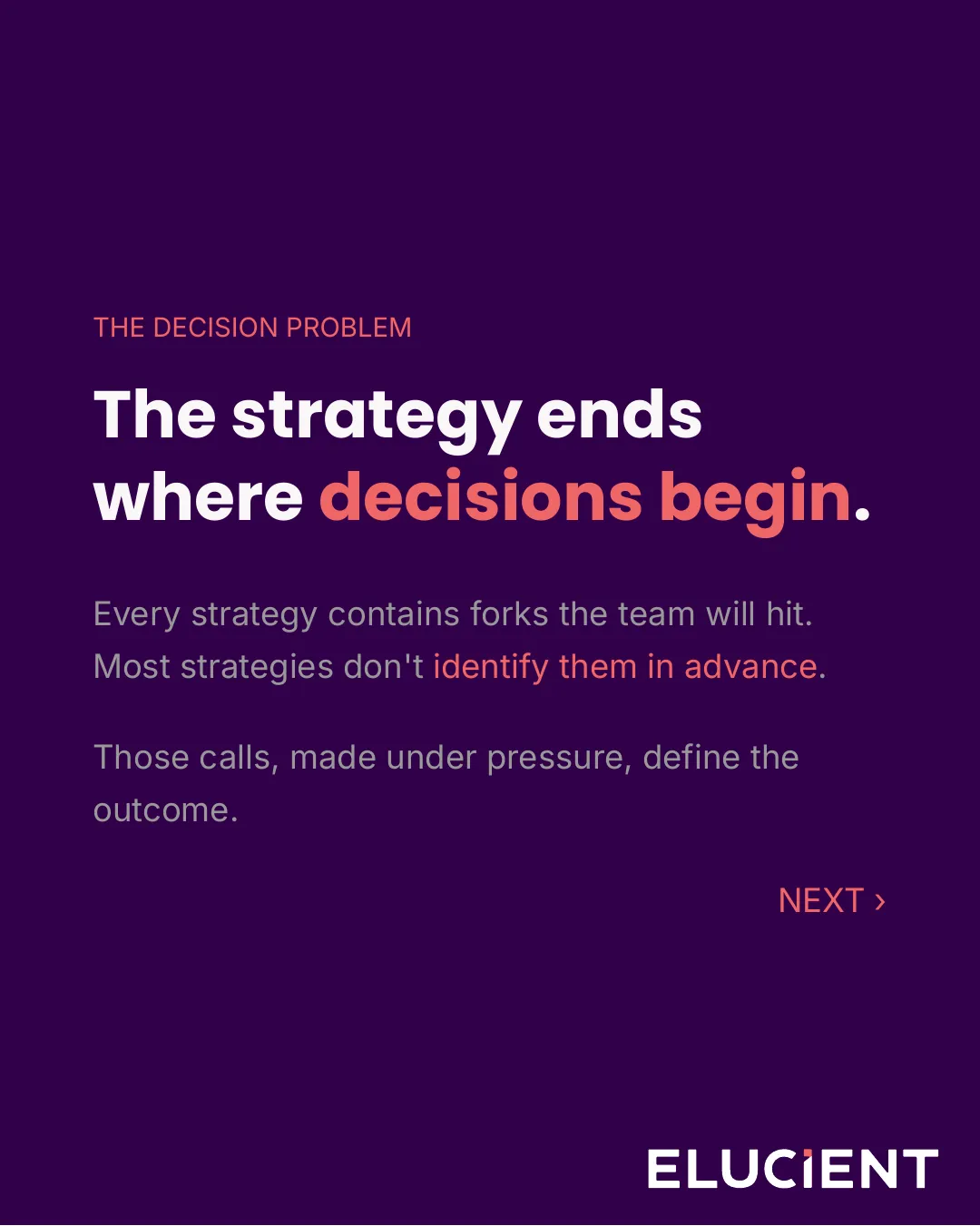
The strategy ends where decisions begin.
Every strategy contains forks the team will hit. Most strategies don’t identify them in advance.
Those calls, made under pressure, define the outcome.
The feedback problem
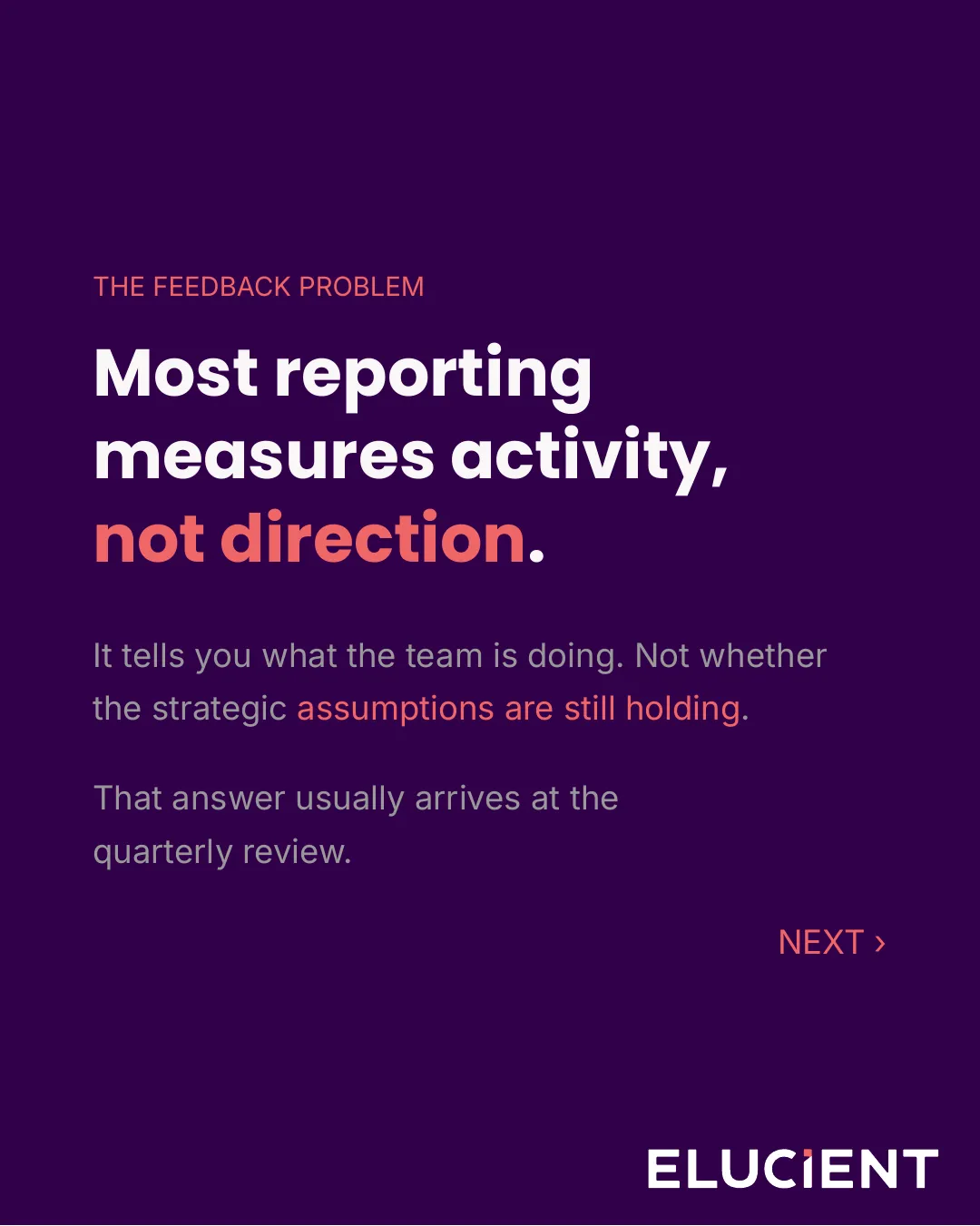
Most reporting measures activity, not direction.
It tells you what the team is doing. Not whether the strategic assumptions are still holding.
That answer usually arrives at the quarterly review.
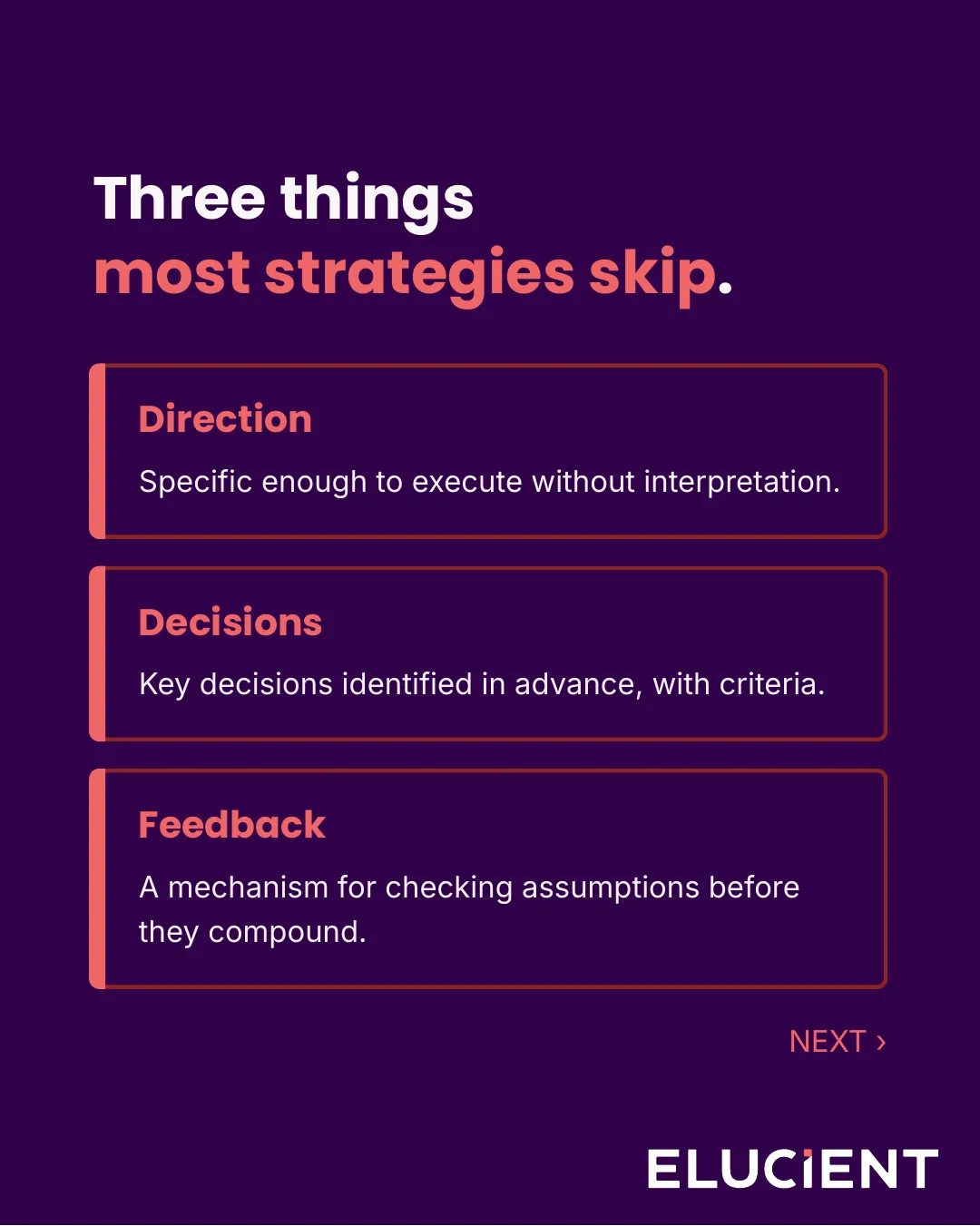
Three things most strategies skip.
- Direction: Specific enough to execute without interpretation.
- Decisions: Key decisions identified in advance, with criteria.
- Feedback: A mechanism for checking assumptions before they compound.
The gap between where your strategy said you’d go and what your team is executing against is almost never a talent problem. It is a documents problem. And it is fixable.